
ACP is the fast and effective treatment to remove skin tags, DPN, seborrhoeic keratosis, blood spots, milia and other unwanted skin lesions.
Skin tags are common, benign skin growths that hang from the surface of the skin on a thin piece of tissue called a stalk. They are made up of many components, including fat, collagen fibers, and sometimes nerve cells and small blood vessels. It’s possible that these collagen fibers and blood vessels become wrapped up inside a layer of skin, leading to the formation of a skin tag. The medical term for a skin tag is acrochordon, and they can also be referred to as soft fibromas or fibroepithelial polyps.
Skin tags are frequently found in areas of friction on the skin, such as the neck, underarms, under the breasts, eyelids, and other skin folds. They start as small, often flesh-colored bumps. They may stay that size and go largely unnoticed, enlarge and continue to be painless, or enlarge and become irritated due to friction or pressure.
It’s not entirely clear what causes skin tags, and there are no proven ways to prevent them. Some studies have shown that skin tags are more common in people who have diabetes or are overweight. Pregnancy may also lead to increased numbers of skin tags, most likely due to hormonal changes in the body. We are pleased to offer skin tag removal here at MH Aesthetic & Beauty Clinic
We are unable to treat if any of the following apply.
Consultations are included in all 1st time appointments into clinic and available as a bookable option when booking in online. This gives the opportunity to discuss your skin concerns, treatment proceedure explained and what to expect from your Aesthetician.
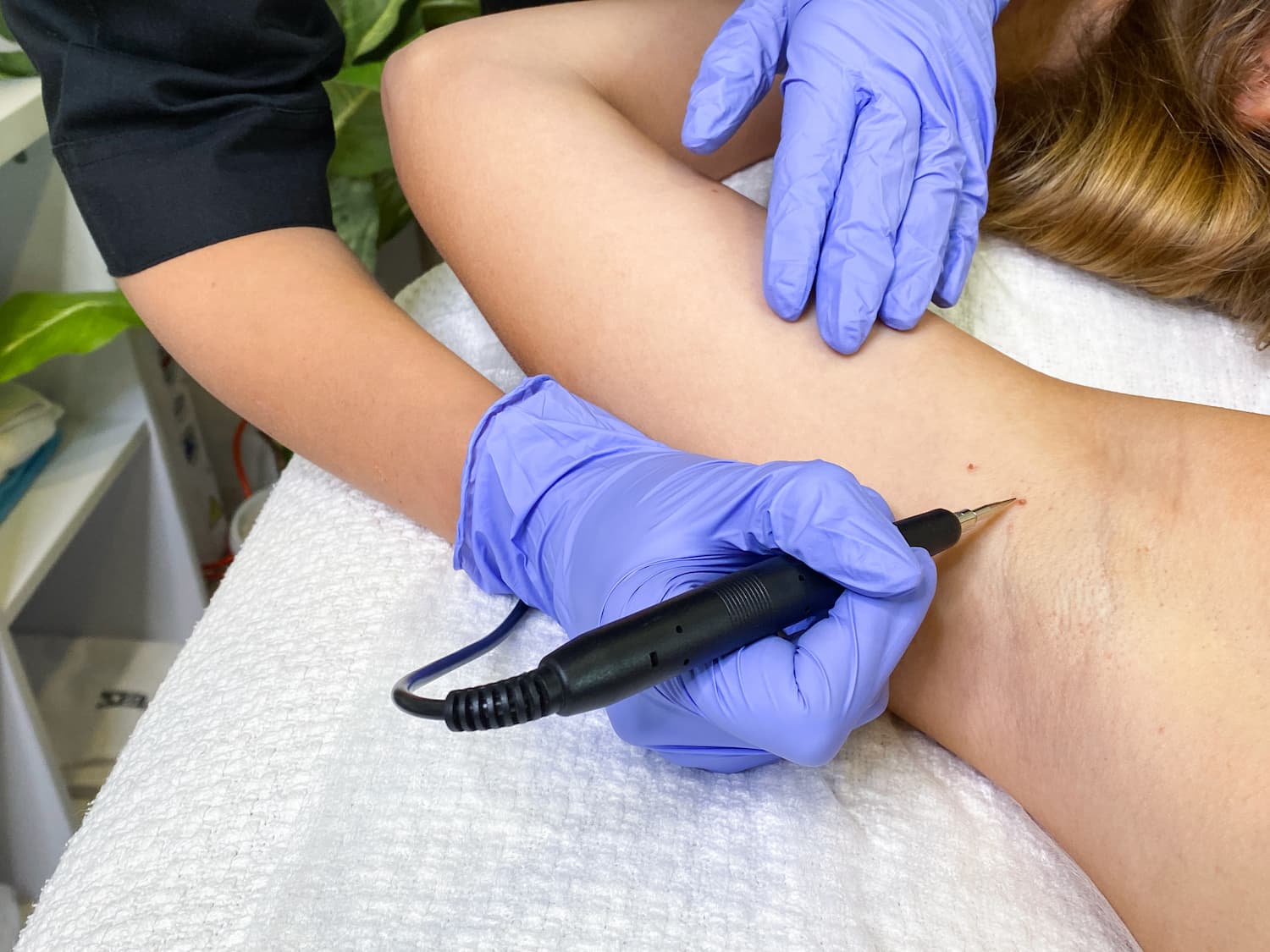
The coagulator nozzle is applied to the papilloma leg and an
electric current is applied. For convenience, you can pull the
tumor with tweezers to open access to the leg.
Move the nozzle from zone to zone, exposure time per zone
up to 0.5 seconds. To remove large volumes of tissue, it is
necessary to make several passes or increase energy. There is
a burning of growth tissues, which leads to their death. The
duration of the procedure depends on the number of
papillomas and their size. Most likely, tumors on the leg are
removed. Outgrowths on a broad basis are burned in layers.
Point coagulation is used to remove a small hemangioma.
mmediately after removal at the site of the former tumor is
noticeable pink delicate skin, which in
the process of healing is formed into a crust.
Clean the wound once or twice daily with water.
Do not scratch, pick or rub the wound during recovery.
Avoid direct sun exposure.
Keeping the area moist may help relieve itching.
Showering is allowed after 24 hours
Keep treatment area dry
Apply SPF
Apply ointment